Health Intelligence
The Chemistry Experiment Hiding in Your Bathroom Cabinet
Darren Crowder · · 6 min read
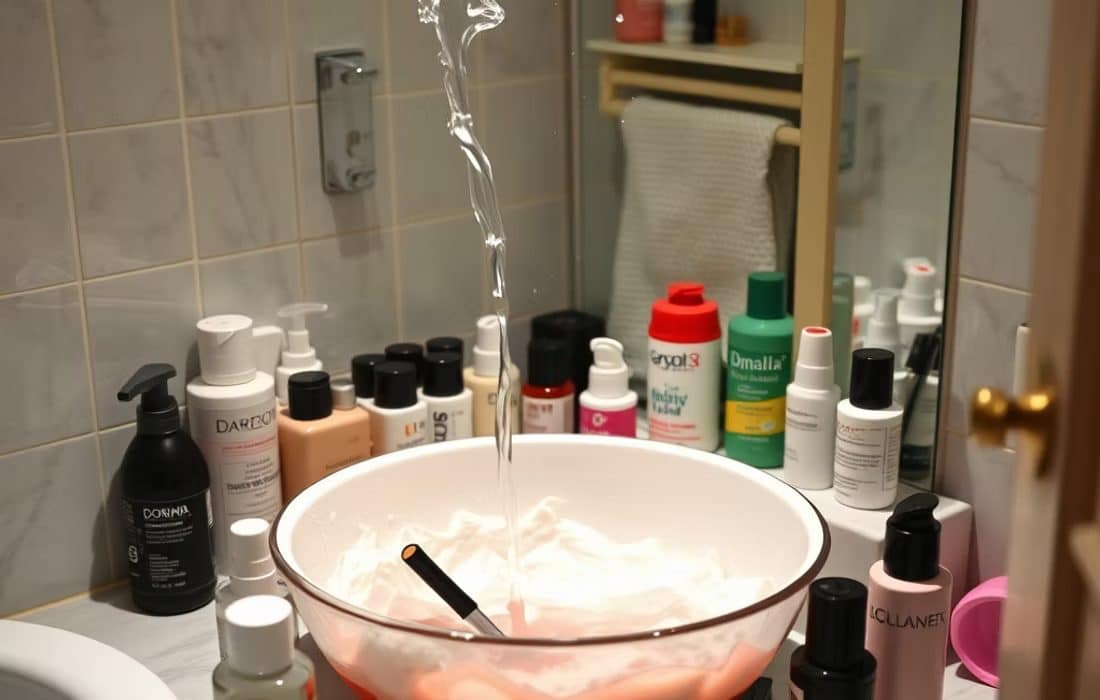
I’ve spent some 18 months plus studying how personal care products are tested for safety. The system assumes your body has no chemical history.
Every morning, you start with a clean slate. The shampoo gets tested. The moisturiser gets tested. The deodorant gets tested. Each one passes safety standards individually. But nobody tests what happens when you layer deodorant over body lotion, spray cologne after, apply makeup on top.
You’ve created chemical combinations that have never been studied together.
The foundational flaw
The average adult uses 9–15 products daily. That’s over 168 unique chemicals before breakfast. Safety panels operate on biological amnesia. They assess each product as though your skin, gut, and bloodstream have no memory of what came before. This isn’t a gap in the system. This is how the system was designed to function.
When I went to my GP about heart arrhythmia, I had months of Apple Watch data. My heart rate was dropping off charts and spiking as if I’d just finished a sprint. The doctors put me on ECGs for hours, then days, then weeks. They found nothing. The technology existed. The evidence was there. The institutional system refused to integrate it. I see the same pattern in personal care product safety.
When medical guidance becomes the exposure source
A dermatologist in London prescribed five products to a patient with rosacea. The patient believed this was a good deal — they trust the dermatologist and they are paying for the service. Each product had been tested individually. Each passed safety standards. But nobody had calculated what happens when you use all five, twice daily.
When we analysed these five products at Enbodie, we identified 25 harmful ingredients. One stood out: phenoxyethanol, a preservative that prevents bacterial growth. It’s in moisturisers, serums, cleansers, and sunscreens. The European Commission says it’s safe at concentrations up to 1% in cosmetics.
But that 1% limit assumes you’re using one product.
This patient was prescribed five products, each containing phenoxyethanol, applied multiple times: morning routine, evening routine, then reapplied after gym sessions. The cumulative exposure wasn’t 1%. It was five times that threshold, multiplied by reapplication frequency. Phenoxyethanol has been linked to skin and eye irritation, nervous system effects, and allergic reactions. Yet no clinical system flagged this risk. No safety database calculated cumulative dosage. This is exposure without detection infrastructure.
The cocktail effect nobody tests
Phenoxyethanol is just one of 25 harmful ingredients we identified in those five products. Research shows that combined exposure creates toxic cocktail effects — adverse impacts trigger even when each chemical is at low concentrations, below levels considered safe individually. Combinations of endocrine disruptors produce significant effects even when each chemical alone doesn’t. Yet regulatory testing still assesses products one at a time.
Something listed as ‘fragrance’ can be a mixture of thousands of chemicals. You don’t know what you’re exposed to because the labels don’t tell you. Think of it this way: if you were exposed to alcohol or tobacco daily, you’d consider the cumulative effect. But when we’re getting ready in the morning, it doesn’t even cross our mind.
Beyond preservatives: the forever chemicals
Whilst phenoxyethanol exposure can be reduced by switching products, some chemicals are far more persistent. PFAS (per- and polyfluoroalkyl substances) are fluorinated ‘forever chemicals’. They contain exceptionally strong carbon–fluorine bonds. They don’t break down in the environment. They don’t break down in your body.
Studies show more than 95% of Americans have PFAS in their blood. UK research found PFAS in all 17 British politicians and environmentalists tested — more than half exceeded levels of concern. PFAS are used in cosmetics for water-resistant and long-lasting properties: foundations, mascaras, and lipsticks. The FDA found more than 50 PFAS ingredients in almost 1,700 personal care products. When ingredients are disclosed, look for ‘fluoro’ or ‘perfluoro’ — but nobody calculates cumulative exposure across your routine.
The equality dimension
The chemical burden hits unevenly across populations. Non-Hispanic Black women are twice as likely as white women to have used hair products with high hazard scores in the last 24–48 hours. An analysis of more than 4,000 products marketed to Black women found almost 80% were rated moderate to high hazard. Women of colour use twice as many products on average — the exposure compounds at every layer.
The datasets that calibrate safety standards systematically excluded these populations. Now the products marketed to them carry disproportionate risk. This isn’t accidental. This is structural.
The architectural correction
I didn’t build Enbodie to create fear. What I’m speaking about are the facts, real examples — and if you take the time to look into it yourself, you’ll reach the same conclusion I came to. We built it because safety testing is architecturally broken.
We analyse your routine as a system. We calculate cumulative dosage against safety standards. We map ingredient exposure across every product you use: shampoo, moisturiser, deodorant, makeup, toothpaste. The technology to do this exists — smartphones can become clinical-grade health intelligence endpoints. Studies show that when you swap hazardous products for safer alternatives, your chemical levels drop within days. But you need visibility into your exposure first.
Why independence matters
Regulatory frameworks vary dramatically by region. In the US, companies don’t have to prove personal care products are safe before selling them. The EU has banned over 1,600 substances from cosmetics; the US has prohibited fewer than a dozen. Yet even Europe’s stricter ingredient bans don’t address the fundamental flaw: cumulative exposure.
High-hazard products are more commonly sold in lower-income neighbourhoods, where safer alternatives are harder to find or more expensive. The confusion isn’t accidental — informational opacity serves commercial interests. This is why independence from commercial influence is a structural prerequisite for trustworthy guidance.
The question you should ask
The experiment is happening whether we acknowledge it or not. You’re layering products every day. Chemicals are accumulating in your bloodstream — some of them persist for decades. The regulatory system tests each product individually. But you don’t use them individually. You use them in combination.
The question isn’t whether you’re participating in an uncontrolled chemistry experiment. The question is: do you have visibility into your exposure? Safety testing should reflect how we actually use products. Until it does, you need tools that analyse your routine as an integrated system. That’s what we built Enbodie to do.