Health Intelligence
Your Microbial Mantle: Why PFAS Don’t Just Sit in One Place
Darren Crowder · · 6 min read
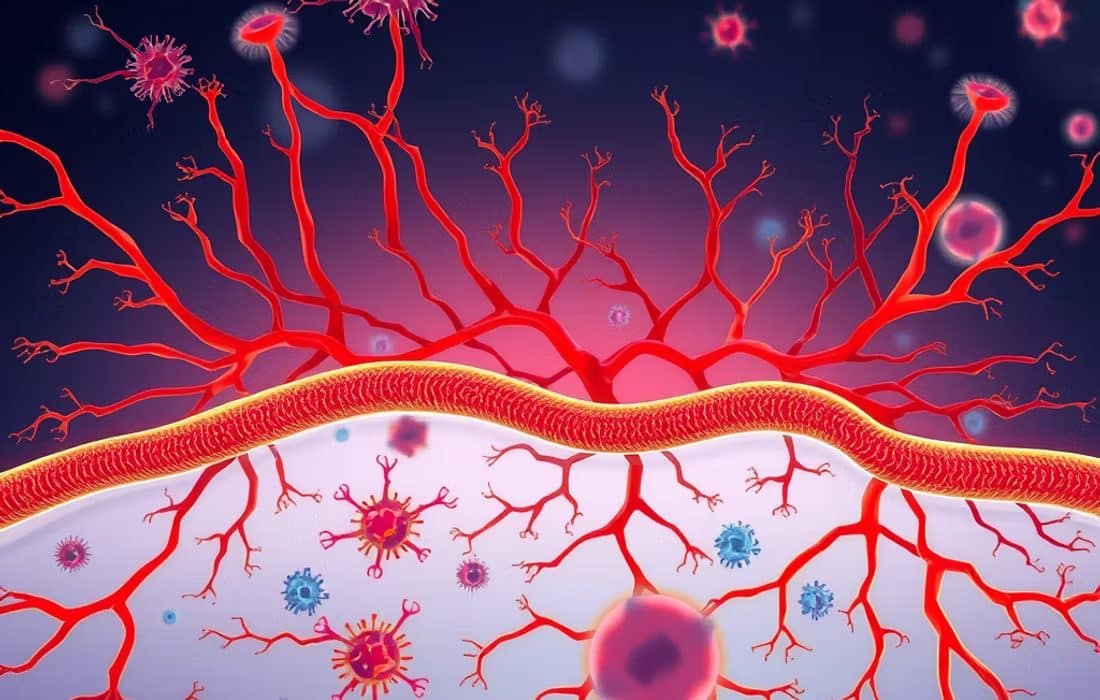
I’ve spent a long time watching people try to optimise their health by treating their gut, skin, and eyes as completely separate problems. We’ve analysed well over 500 different individuals from various backgrounds and walks of life. They take probiotics for digestion. They buy serums for their skin. They use drops for dry eyes.
All reasonable actions to take. But they miss an important aspect of understanding our bodies — the architecture of how we’re put together. These aren’t separate systems. They’re three surfaces of the same protective structure — what we call your Microbial Mantle™.
When forever chemicals like PFAS accumulate in your body, they don’t respect the neat boundaries you’ve drawn between these systems. They move through an interconnected network, quietly compromising your entire first line of defence. This explains why chemical exposure manifests so differently in different people. And why symptoms often seem entirely unrelated to their cause.
The architecture you didn’t know you had
Your gut lining spans approximately 323 square feet. Your skin covers roughly 270 square feet. Crazy, right?

Both surfaces are supported by your ocular surface — the thin film covering your eyes — which completes this protective architecture. Researchers describe it as “paucibacterial,” harbouring approximately 0.02 bacterial genomes per human genome, compared to 20 on skin. That sparseness makes it particularly vulnerable to disruption.
These three surfaces don’t just share structural similarities. They share functional integration as well. Approximately three in four patients diagnosed with chronic gastrointestinal conditions will also receive a skin disorder diagnosis during their lifetime. Danish cohort data covering 4.36 million people showed that rosacea raises hazard ratios for coeliac disease by 1.46, Crohn’s disease by 1.45, and ulcerative colitis by 1.19. The gut-skin axis isn’t just theory; it’s measurable clinical reality. And it runs both directions.
When barriers talk to each other
A 2024 Nature Communications study provided direct evidence that damage to skin disrupts homeostasis in intestinal host defence and alters the gut microbiome. Dermal injury triggers changes in colon gene expression and bacterial composition. Those changes then enhance intestinal inflammation. Your barriers aren’t isolated fortifications. They’re networked intelligence.
Research confirms that the microbiome of other body sites plays a significant role in the development of ophthalmic diseases. The ocular surface microbiota coordinates barrier preservation, pathogen exclusion, and immune modulation in ways we’re only beginning to fully map.
70–80% of your immune cells reside in your gut.
When gut microbiota becomes dysregulated, it disrupts immune homeostasis. This causes both local and systemic inflammation that can manifest on your skin surface, in your eyes, or both simultaneously. This is why topical treatments alone rarely create lasting results. They’re addressing downstream effects while the upstream disruption continues unchecked.
Where PFAS actually accumulate
In 2025, groundbreaking research published in Nature Microbiology revealed something that reframed everything we thought we knew about chemical exposure. Human gut bacteria bioaccumulate PFAS at millimolar intracellular concentrations — higher than most native metabolites. Your gut microbiome isn’t just exposed to forever chemicals; it’s actively concentrating them inside bacterial cells.
Bacteroides uniformis shows notable PFAS accumulation while retaining growth capacity. The bacteria survive, but their function changes. Their metabolic output shifts. Their communication with your immune system alters in ways that aren’t immediately visible. Metabolomics analysis revealed decreased acetophenone and taurocholic acid at concentrations found in everyday consumer exposure — not industrial contamination. Not factory-floor levels. The products in your bathroom.
Each standard deviation increase in PFAS burden was associated with a 2.4% lower kidney function, with effects mediated 38–50% by gut microbiome alterations.
Your microbial composition determines your vulnerability.
Why chain length changes everything
Not all PFAS are equal. PFAS bioaccumulation potential increases with chain length. Long-chain perfluoroalkyl carboxylic acids show elevated concentrations across multiple taxa and temporal studies. This structural variable — completely invisible on ingredient labels — determines whether a chemical accumulates primarily in protein-rich tissues, lipid compartments, or crosses barriers into vulnerable organs.
Cross-species analysis reveals that PFAS bioaccumulation potential is predicted by specific protein sequences. Yet individual genetic variations in these proteins explain why two people with identical exposure can show dramatically different accumulation patterns. This is precisely why universal safety thresholds fail. They assume biological uniformity that simply doesn’t exist.
Your bacteria might already be protecting you
Here’s something that genuinely stopped me in my tracks. Mice colonised with PFAS-bioaccumulating human gut bacteria showed higher PFAS levels in excreted faeces compared to germ-free controls. The bacteria absorbed between 25% and 74% of PFAS within minutes of exposure.
Our bacteria — that have been our companions for thousands of years — may already be helping us do something about it.
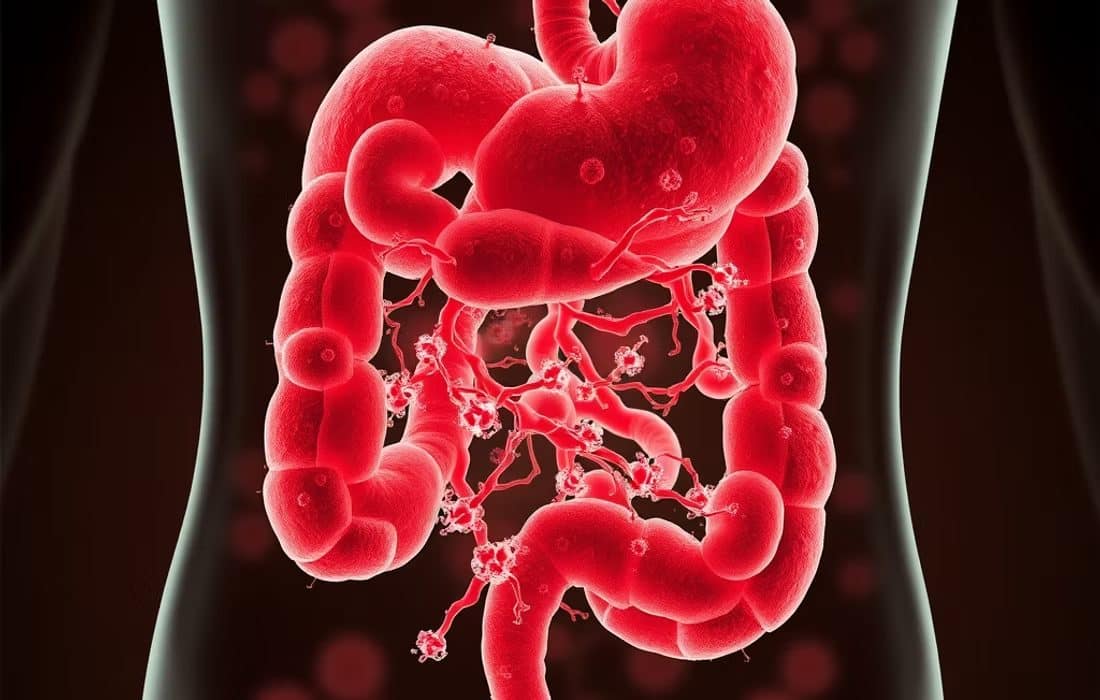
But here’s the catch. Individual microbial composition varies wildly. Some people’s gut bacteria are better equipped to sequester and eliminate PFAS. Others accumulate more because their microbial communities lack the specific strains with high bioaccumulation capacity. You can’t see this variation on a standard blood test. You can’t feel it as a symptom. But it’s quietly determining your trajectory.
Why this architecture changes prevention
When you understand your barriers as interconnected systems rather than isolated surfaces, everything about prevention shifts. You stop treating gut issues with probiotics alone and start asking what’s disrupting microbial communities across all three surfaces. You stop addressing skin conditions with topical treatments alone and start examining cumulative chemical exposure that’s compromising barrier function systemically.
PFAS accumulate in this network. They concentrate in bacterial cells. They alter microbial composition. They shift metabolic output. They compromise barrier function across all three surfaces. And because your microbial composition is uniquely yours, your vulnerability is uniquely yours. This is why two people using identical products can have completely different outcomes.
What preventative infrastructure actually requires
Preventative health at this level demands visibility into cumulative exposure mapped to biological specificity. Not generalised warnings about ingredient categories. Not demographic assumptions about safety thresholds. Not reactive symptom management after the damage is already done.
You need to know which PFAS you’re encountering, at what concentrations, through which products, and how your specific biological architecture — including your microbial composition — determines your accumulation pattern. What’s been missing is the infrastructure to translate clinical-grade knowledge into accessible wellness decision support — without commercial conflicts shaping the guidance.
Because when platforms built to sell products also claim to protect you from those products, the architecture collapses entirely. Independence isn’t a marketing position. It’s a structural requirement for trustworthy guidance. Your Microbial Mantle™ deserves protection based on evidence, not convenience. Based on your biology, not demographic averages. Based on cumulative reality, not isolated product claims.